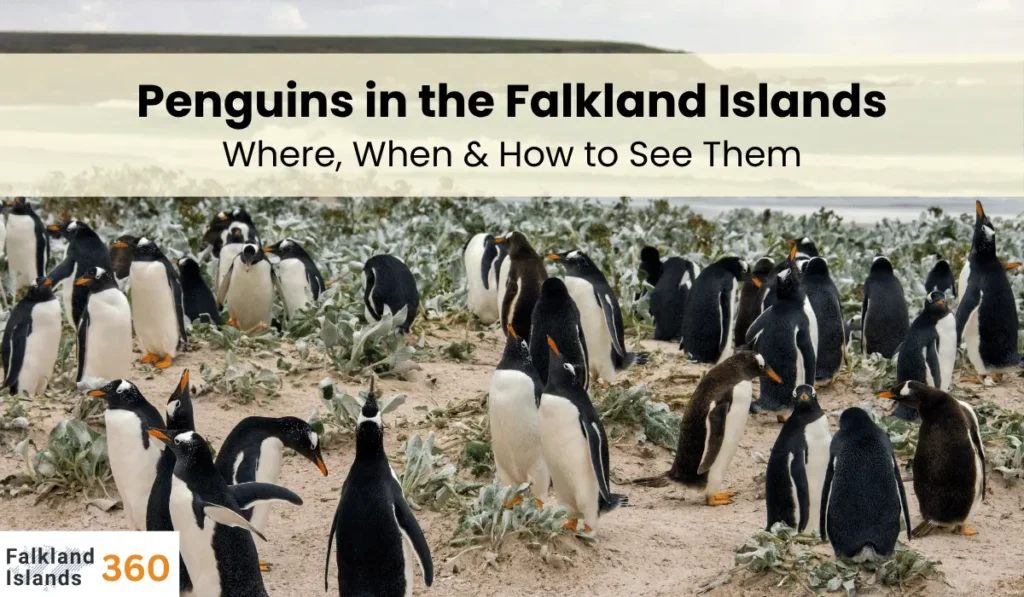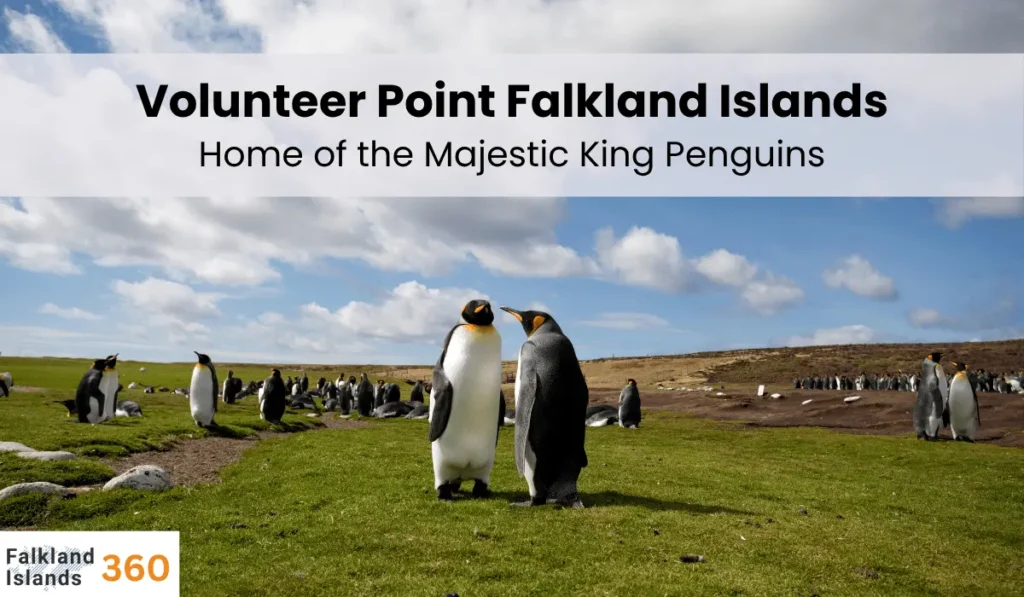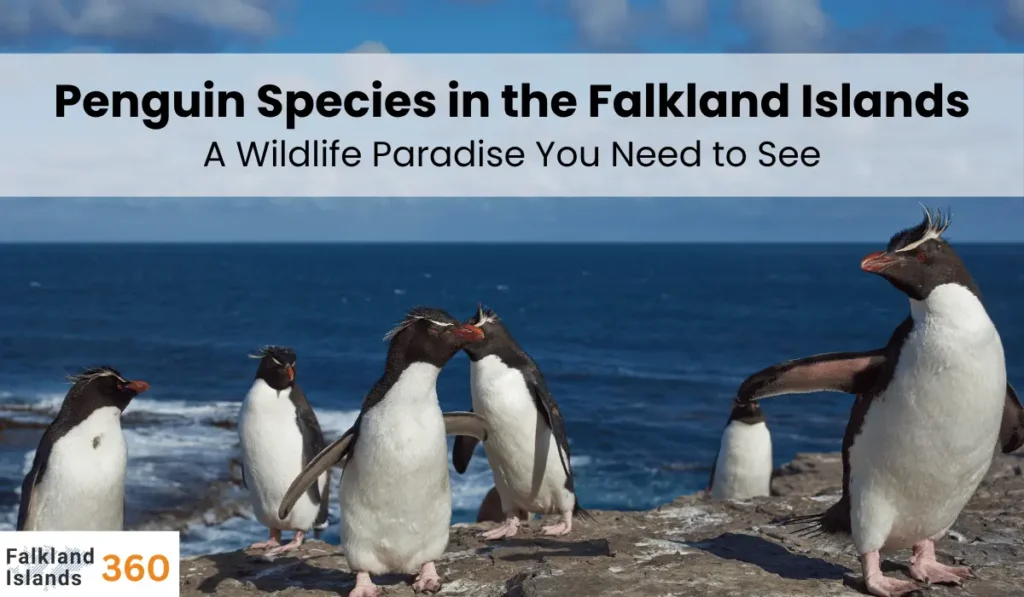
The Falkland Islands are unusually rewarding for wildlife photography because large seabird and penguin colonies can often be observed in open landscapes without barriers. The advantage comes with responsibility: the Countryside Code recommends staying at least 6 m from wildlife, keeping clear of routes to the sea and avoiding disturbance. A longer lens is a better solution than moving closer.
Top photography locations
- Volunteer Point: king, gentoo and Magellanic penguins.
- Saunders Island: five breeding penguin species and black-browed albatross.
- Sea Lion Island: elephant seals, penguins, birds and seasonal orca opportunities.
- Pebble Island: varied birdlife, penguins, beaches and landscapes.
- Gypsy Cove: accessible Magellanic penguins near Stanley.
- Bertha’s Beach: gentoo penguins, coastal birds and possible dolphins.
Lens choice
A telephoto zoom around the 100–400 mm class is highly versatile for birds and penguins while preserving distance. A 70–200 mm can work for larger animals and environmental portraits where wildlife is naturally closer, while a wide-angle lens is useful for landscapes and colony context. Exact focal length depends on sensor size and personal style.
Photograph behaviour, not only portraits
The most distinctive Falklands images often show behaviour: penguins commuting to the sea, albatross flight, parent-chick interactions or seals resting in the landscape. Watch first and predict movement rather than following an animal until it reacts to you.
Wildlife etiquette
Keep at least 6 m away, stay outside colonies, remain low when appropriate and never block a route between wildlife and the sea. Do not chase, startle or reposition animals. Site-specific rules can be stricter. Older official Volunteer Point guidance also explicitly shows no-flash guidance, so natural light and appropriate camera settings are the responsible default.
Protect equipment from wind, rain and sea spray
Carry a rain cover, microfiber cloths and a protected place for spare batteries and cards. Do not grind salt or sand across lens coatings; remove loose particles before wiping. A lens hood provides useful physical protection in drizzle and blowing spray.
Tripods and monopods
A tripod is useful for landscapes but can be awkward around moving wildlife and in strong wind. A monopod or hand-held stabilized lens is often faster. Whatever support you use, keep its footprint out of animal routes and fragile burrow areas.
Plan around season and location
Breeding cycles change what you can photograph. Use our wildlife calendar before choosing dates, then compare destination guides for Saunders, Sea Lion Island and Pebble Island.