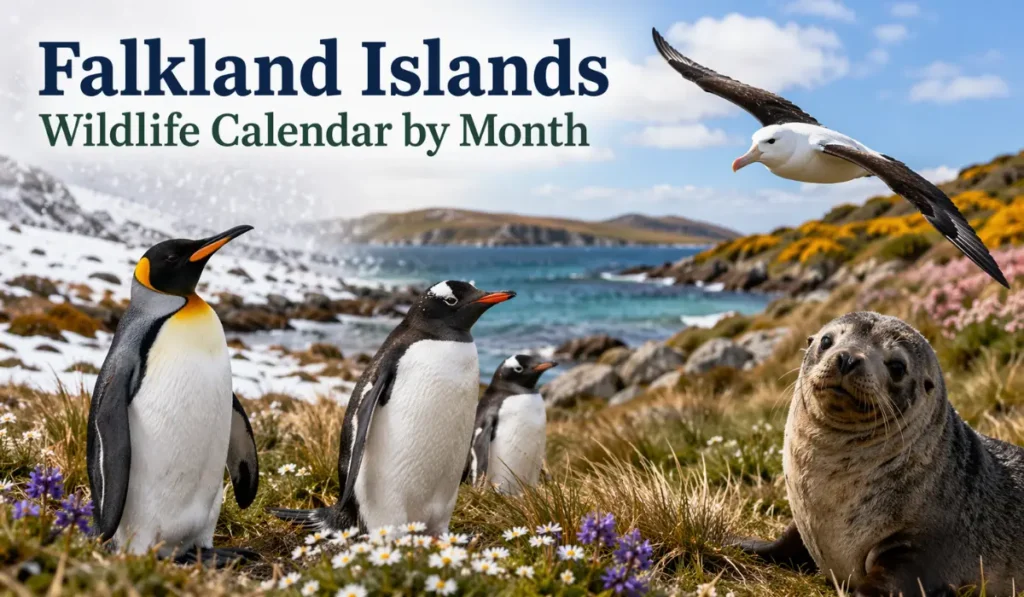
If you want the broadest wildlife trip in the Falklands, plan for November to February. That is the strongest stretch for active penguin colonies, chicks, albatross activity, elephant seals, and sea lions. September and October are better for returns, nest building, courtship, and elephant seal breeding. May to August are quieter on land, but winter is not empty. King penguins remain, some gentoo stay, and southern right whales use Falklands waters in late autumn and winter.
The key thing to know is that a wildlife calendar is a planning tool, not a promise. Seasons shift a little. Weather affects access. Outer-island logistics can shape what you actually see as much as the month does. Still, the broad rhythm is stable enough to plan around with confidence.
What is the best month for wildlife in the Falklands?
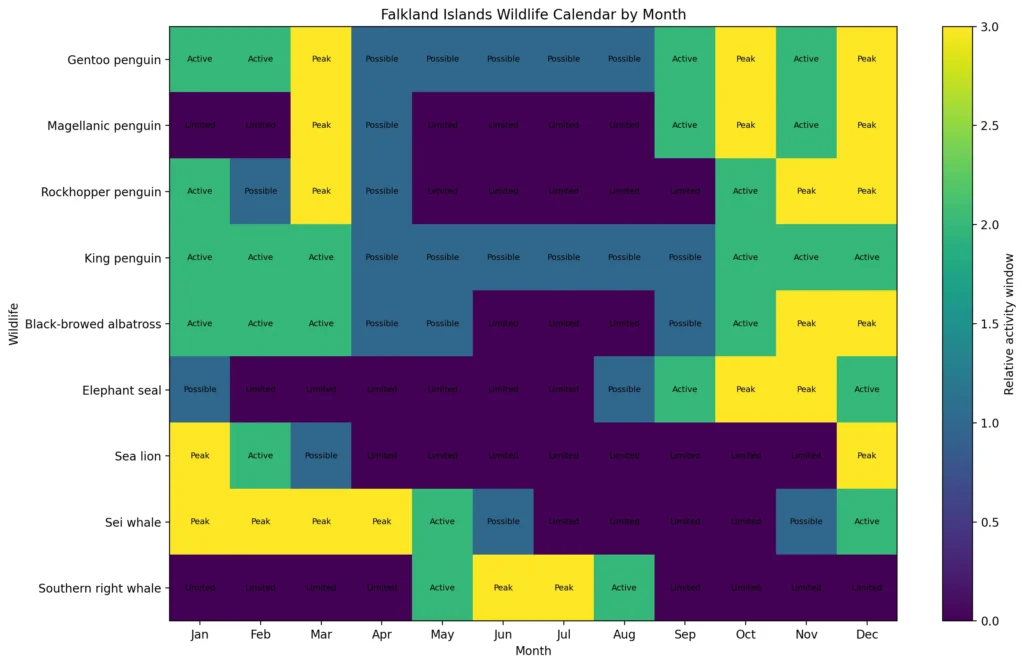
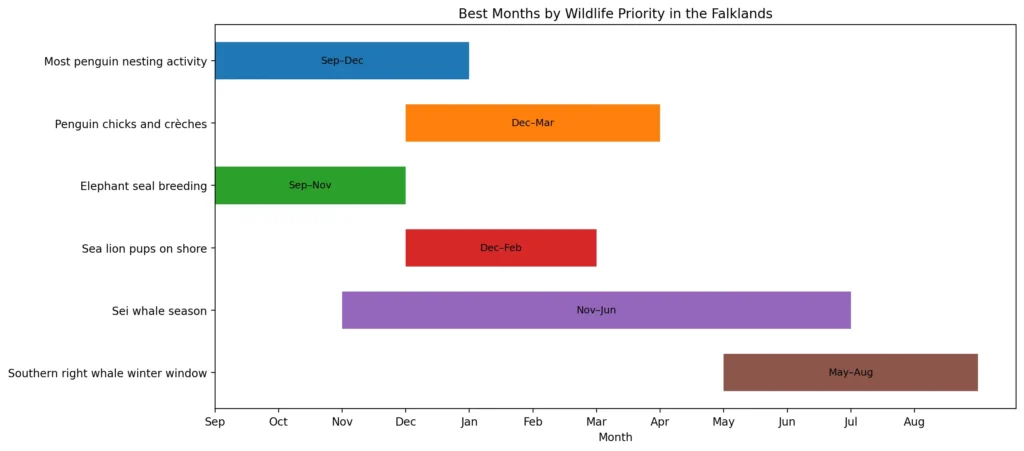
For most travelers, December and January are the easiest answer. You get the richest mix of penguins, seabirds, elephant seals, and sea lions, with plenty of visible activity on shore. If your focus is courtship, nesting, and breeding behavior, lean earlier toward September to November. If you want large chicks, crèches, and late-summer colony life, aim for January to March. For southern right whales, the better window is May to August, while sei whales are most often reported between January and May, within a broader summer-autumn season that runs mainly from November to June.
Falkland Islands wildlife calendar by month
The table below is a practical travel summary built from Falklands Conservation’s wildlife calendar, the Falkland Islands tourist board’s seasonal wildlife guidance, and Falklands Conservation’s whale notes. Treat it as a planning map, not a fixed timetable.
| Month | What wildlife is usually strongest | Good planning focus |
|---|---|---|
| January | Gentoo and rockhopper chicks begin to form crèches. Albatross chicks are still under close care. Sea lion pups are abundant. Elephant seals begin moulting later in the month. King penguin colonies show mixed life stages. | Sea Lion Island, Volunteer Point, West Point Island |
| February | Late-summer chick season. Young Magellanic penguins start appearing outside burrows. Sea lion pups gather in groups but continue suckling. Sei whale season is strong. | Stanley area for Magellanics, Sea Lion Island, coastal whale watching |
| March | Many penguin chicks fledge. Gentoo, Magellanic, and rockhopper colonies start thinning out. King penguins are still active. | Good late-season wildlife trips with fewer visitors |
| April | Many migratory seabirds begin leaving. Rockhoppers finish moulting late in the month. King penguins remain. | Best for travelers who still want kings and quieter colonies |
| May | Wildlife on land is quieter. Some gentoo remain through winter. Southern right whale season begins to matter more. | Winter-focused trips, king penguins, early whale watching |
| June | One of the quietest land-wildlife months, but southern right whales can use nearshore winter waters. King penguins remain. | Winter whale interest, year-round king penguin planning |
| July | Similar to June. Limited penguin variety on shore, but winter whale interest continues. | Low-season wildlife with a marine focus |
| August | Late winter. Southern right whale window can continue. Land activity stays modest, with kings and some gentoo still around. | Quiet-season travelers |
| September | Gentoo and Magellanic penguins return and begin nest building. Elephant seals return. Spring colony activity starts building. | Early breeding season, fewer people |
| October | Gentoo and Magellanic egg laying. Rockhoppers arrive. Breeding king penguins return. Black-browed albatross lay eggs mid-month. Elephant seal pups are born in late September and early October. | One of the best months for breeding behavior |
| November | Most penguins incubate eggs. Rockhopper eggs are laid early in the month. Elephant seals mate. Sei whale season builds. | Excellent all-round month |
| December | Egg hatching time for penguins and albatross. Rockhopper chicks hatch early in the month. Sea lions establish territories and begin pupping late December into mid-January. Orca activity around Sea Lion Island is most frequent from mid-November to mid-December. | Best broad wildlife month for many travelers |
Best months based on what you want to see
For the widest mix of wildlife
Go in November, December, or January. Those months give you the easiest blend of active penguin colonies, black-browed albatross, elephant seals, sea lions, and strong general birdlife. Official tourism guidance also treats December to February as the best overall season for variety.
For penguin nesting and breeding behavior
Go in September to November. September is the return-and-nest-building month for gentoo and Magellanic penguins. October brings egg laying for gentoo and Magellanic penguins, plus rockhopper arrival and black-browed albatross egg laying. November is prime incubation time across much of the seabird calendar.
For penguin chicks
Go in December to March, with January and February especially good if you want visible chick activity without needing to time exact hatching dates. December brings hatching. January brings crèches. March is a good month to catch fledging for several penguin species.
For elephant seals and sea lions
For elephant seal breeding, aim for September to November, especially October. For sea lion pups, look at late December to February. If you want a single place that concentrates this kind of marine-mammal viewing, Sea Lion Island is one of the clearest choices. Official tourism guidance says it is the Falklands’ most important elephant seal breeding site, with sea lion viewing best in summer.
For whales
For sei whales, the best-known visitor window is summer into autumn, with most sightings reported January to May and the broader season described mainly as November to June. For southern right whales, think late autumn and winter, especially May to August. Falklands Conservation notes that right whales use nearshore waters in winter for socialising and mating, with strong use documented along the north coast of East Falkland.
Where to plan each wildlife experience
Volunteer Point for king penguins
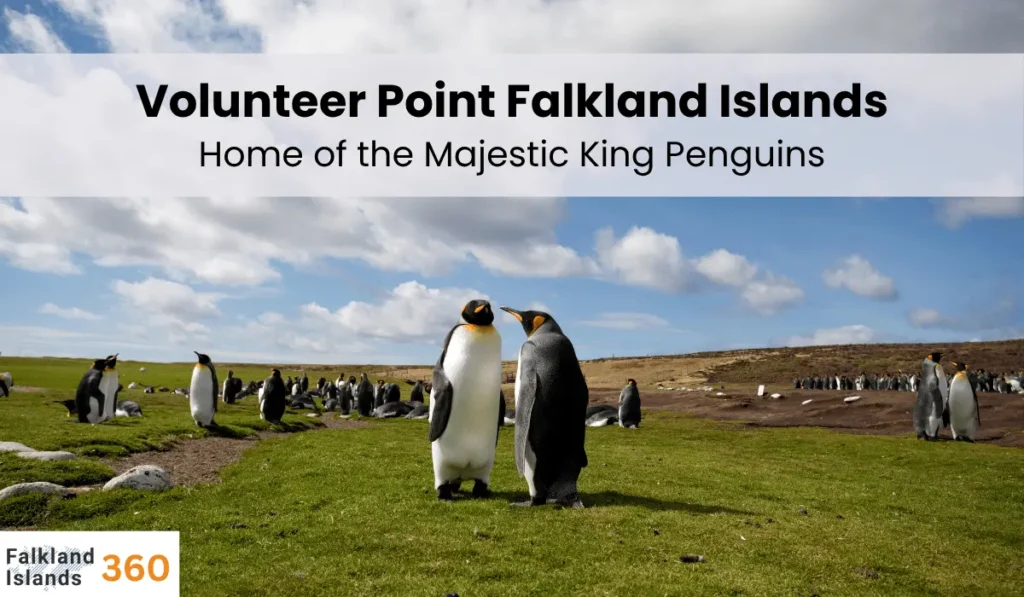
If king penguins are your priority, Volunteer Point is the first place most travelers plan around. The Falkland Islands tourist board describes it as the site with the largest breeding group of king penguins in the islands. It is usually visited as a day trip from Stanley, and official visitor guidance notes that you normally need a local guide and landowner permission.
Gypsy Cove and the Stanley area for easy penguin viewing
If you only have a short stay, or a cruise stop, the quickest wildlife win is near Stanley. Official FAQs note that Gypsy Cove is about 8.5 km from central Stanley and is one of the easiest places to see Magellanic penguins.
West Point Island for black-browed albatross and rockhoppers
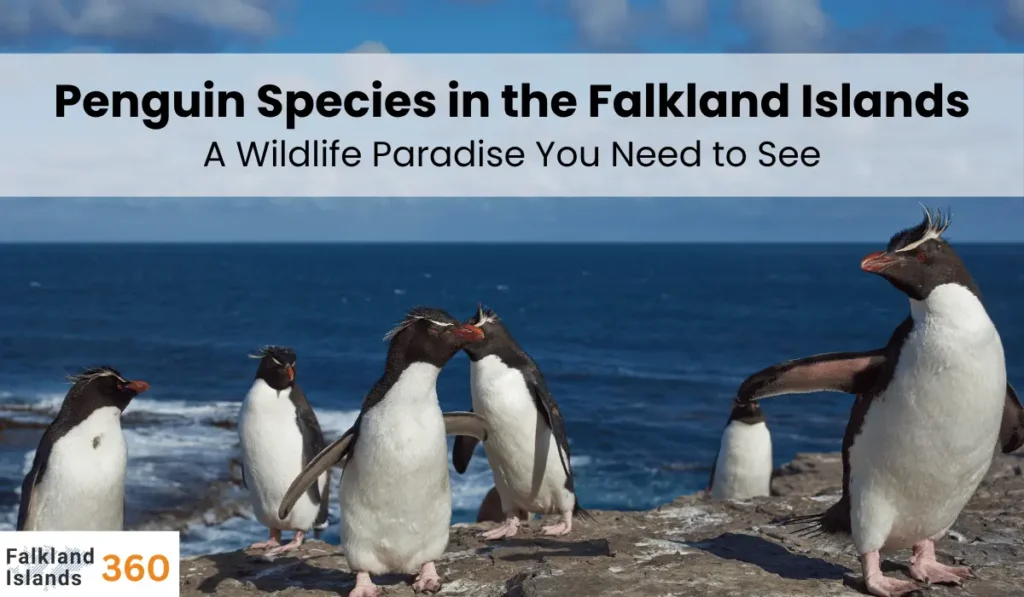
For classic cliffside seabird scenes, West Point Island stands out. The tourist board describes it as an Important Bird Area known for black-browed albatross, with rockhopper penguins and imperial cormorants also present. It also notes that whales, fur seals, sea lions, and dolphins are often seen there.
Sea Lion Island for seals, sea lions, and summer drama
Sea Lion Island is one of the strongest mixed-wildlife islands in the Falklands. Official guidance says it is one of the best places to see orcas, most often between mid-November and mid-December when elephant seal pups first enter the sea. The same source describes it as the most important elephant seal breeding site in the Falklands and says sea lion viewing is best in summer. It also has gentoo, Magellanic, and rockhopper penguins.
How to use this calendar when planning a trip
A good Falklands itinerary starts with one question: what do you most want to see? If the answer is “as much wildlife as possible,” stay close to November through February. If the answer is “king penguins no matter what,” you have more flexibility because kings are present year-round. If you want seals and seabird colonies together, build your trip around outer islands.
It also matters how mobile you are. The best short-stay wildlife options are around Stanley, Gypsy Cove, and guided day trips such as Volunteer Point. Many of the best outer-island wildlife experiences are usually reached by FIGAS, the Falkland Islands Government Air Service. That makes weather, luggage limits, and island accommodation part of the wildlife-planning equation.
A final practical note: the “best” month is not always the best fit. October can be stronger for breeding behavior and cleaner colony scenes. January is better for visible chick life. March can be a smart compromise if you want wildlife with a slightly quieter feel. Winter suits travelers who care more about kings, solitude, and marine mammals than about peak seabird variety.
Wildlife viewing rules worth following
The Falklands are unusual because wildlife can feel very close. That does not mean you should push closer. Official visitor guidance recommends keeping 6 metres from wildlife, not getting between an animal and its path to the sea, and staying calm if birds approach you on their own. At managed sites such as Volunteer Point, visitors are also expected to stay behind ropes, keep to marked trails, and follow local instructions and any biosecurity rules in place.
That matters for your trip as much as it matters for the animals. Good wildlife days in the Falklands usually come from patience, low movement, and letting the colony settle around you. The best sightings often happen when you stop trying to force them.
Final thought
The best way to use a Falkland Islands wildlife calendar by month is to match the month to your real priority. Go early for breeding behavior. Go in high summer for the richest all-round wildlife mix. Go later for chicks and fledging. Go in winter only if you are happy with a quieter land season and a more marine-led experience. Once you know which of those versions of the Falklands you want, the trip gets much easier to shape.
FAQ Section
What is the best month to see penguins in the Falkland Islands?
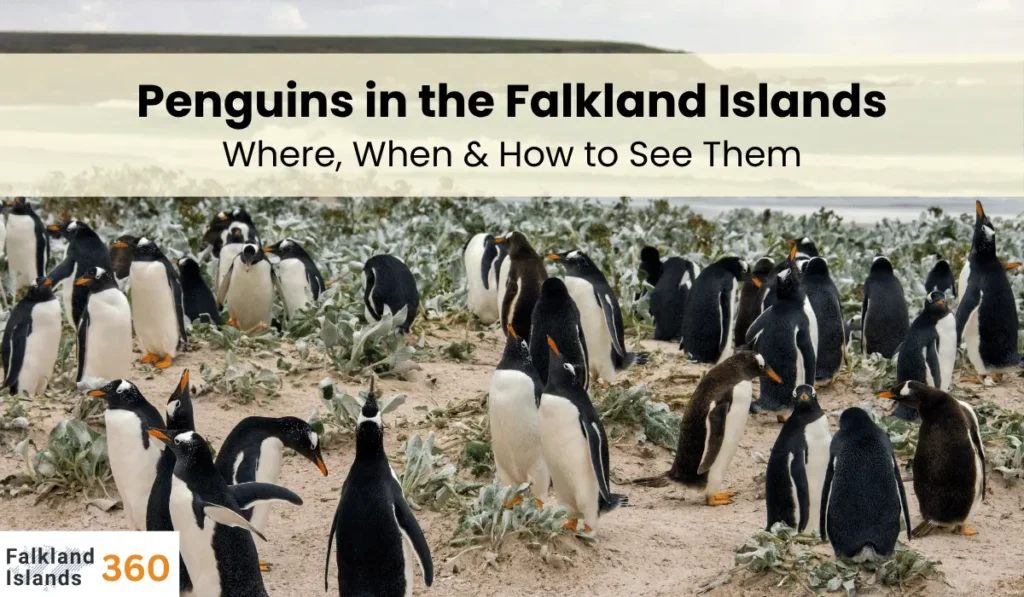
There is no single perfect month for every penguin experience. October and November are better for breeding activity. December to February are better for hatching and chick life. January to March are good for crèches and fledging. If you want the broadest penguin trip with the least guesswork, December or January are the safest picks.
Can you see wildlife in the Falklands in winter?
Yes, but winter is quieter. Official guidance says some gentoo remain through winter, king penguins are present year-round, and southern right whales use Falklands waters in late autumn and winter. You should expect less seabird variety on shore than in summer.
Where can I see king penguins in the Falklands?
The best-known place is Volunteer Point, which the tourist board describes as home to the largest breeding group of king penguins in the islands.
Which island is best for elephant seals and sea lions?
Sea Lion Island is one of the strongest choices. Official tourism guidance calls it the Falklands’ most important elephant seal breeding site and says sea lion viewing is best during the summer months.
Is this wildlife calendar useful for cruise visitors?
Yes, but with limits. Cruise visitors can still plan around easy-access wildlife such as Gypsy Cove near Stanley and guided trips to Volunteer Point. Longer stays give you much better access to outer-island wildlife sites.
How close can you get to wildlife in the Falklands?
Official guidance recommends keeping 6 metres from wildlife and never blocking an animal’s route to the sea. At managed sites, follow rope lines, marked paths, and local instructions.