
The Falkland Islands are a remote South Atlantic destination best known for penguins, seabirds, dramatic coastlines, 1982 history and small-scale island travel. A good trip is absolutely possible, but the islands reward planning because international flights are limited, accommodation can be small, and outer-island travel depends on weather and local logistics.
For a first visit, the simplest approach is usually to spend time in Stanley, add one or two wildlife-focused excursions, and only add outer-island stays if your schedule is long enough to absorb weather and transport changes.
This guide is the starting point for the whole site. If you are still deciding whether the destination fits you, read are the Falkland Islands worth visiting? If you already know you want to go, use the sections below to build the trip in the right order.
Falkland Islands travel at a glance
- Main arrival airport: Mount Pleasant Airport (MPN) on East Falkland.
- Main scheduled civilian flight: LATAM every Saturday from Santiago via Punta Arenas.
- UK option: twice-weekly fare-paying Ministry of Defence Airbridge from RAF Brize Norton via Ascension Island.
- Main visitor season: roughly November to March, with December to February the busiest summer period.
- Best-known wildlife: five breeding penguin species, seabirds, elephant seals, sea lions and whales.
- Capital: Stanley on East Falkland.
- Local currency: Falkland Islands pound (FKP), at parity with GBP.
Where are the Falkland Islands?
The Falklands lie in the South Atlantic, about 400 miles (650 km) from mainland South America. The archipelago is made up of East Falkland, West Falkland and hundreds of smaller islands.
That location matters because almost every part of the travel experience is shaped by distance. Flights are limited, imported goods can be expensive, weather can affect internal travel, and the best wildlife sites are spread across a large archipelago rather than concentrated around one town.
For a map-based explanation, use our Falkland Islands location and distance guide and the deeper map and geography guide.
How to get to the Falkland Islands
The main scheduled civilian route is LATAM’s Saturday flight from Santiago, Chile, via Punta Arenas to Mount Pleasant Airport. Once a month the service also calls at Rio Gallegos, Argentina.
The UK Ministry of Defence also operates a twice-weekly fare-paying Airbridge from RAF Brize Norton in Oxfordshire, with a refuelling stop at Ascension Island. Civilian seats are available, but the service does not behave exactly like a normal commercial airline and can be subject to operational changes.
The previously advertised Wednesday LATAM route from São Paulo is not currently operating. The official Tourist Board still says it has not been reinstated after its pandemic suspension.
Compare every current option in our guide to how to get to the Falkland Islands, or use the dedicated LATAM vs UK Airbridge guide.
Entry requirements in 2026
Current official guidance says your passport should be valid for the duration of your stay. Visitor permits are normally issued on arrival for up to one month, although visa requirements depend on nationality and some travellers must arrange a visa in advance.
Falkland Islands Customs & Immigration says visitors should be ready to show proof of onward travel, pre-booked accommodation, sufficient funds and adequate medical insurance. The insurance requirement includes aeromedical evacuation cover to a minimum value of US$2,000,000 equivalent.
Because entry rules can change, check our Falkland Islands travel requirements page and confirm against the official Customs & Immigration visitor permit page before departure.
Best time to visit
For the broadest wildlife experience, November to February is the easiest planning window. Summer gives visitors active penguin colonies, seabirds, seals and long daylight hours. December and January are especially strong if this is your first wildlife trip.
Spring is better for courtship, nest building and breeding behaviour. Late summer into early autumn can be excellent for chicks and fledging. Winter is much quieter on land but can still appeal to travellers interested in king penguins, solitude and some marine mammals.
Use the month-by-month best time to visit guide and the wildlife calendar before choosing dates.
Wildlife and penguins
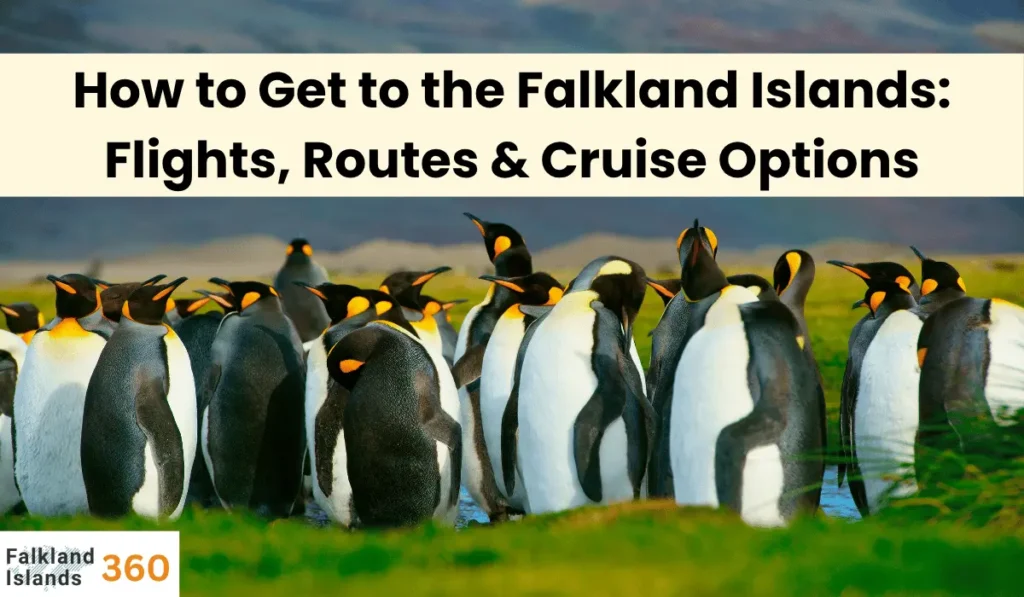
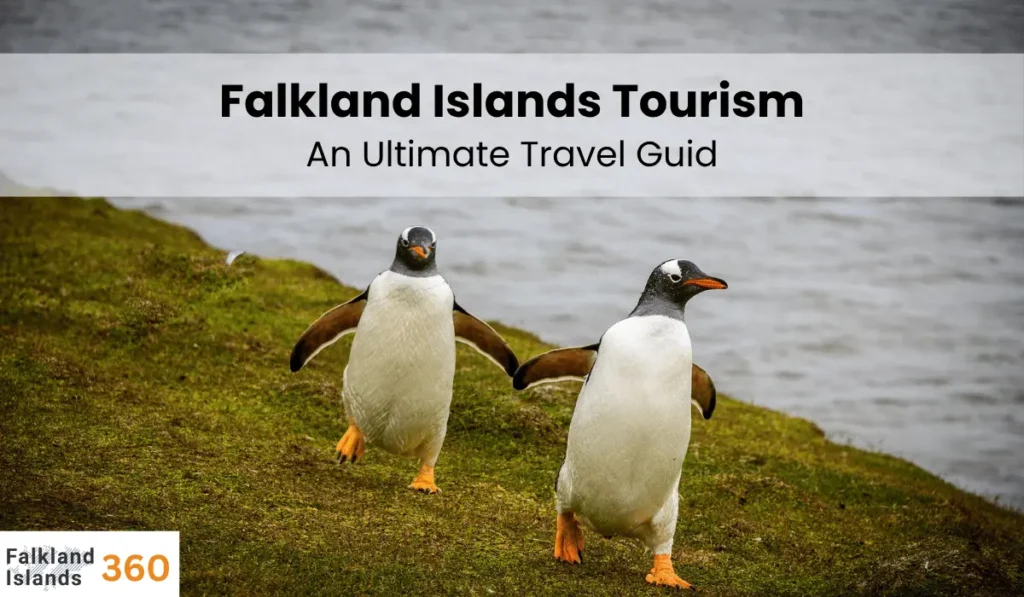
The Falklands have five breeding penguin species: king, gentoo, Magellanic, southern rockhopper and macaroni. Official tourism material says around one million penguins nest in the islands during summer.
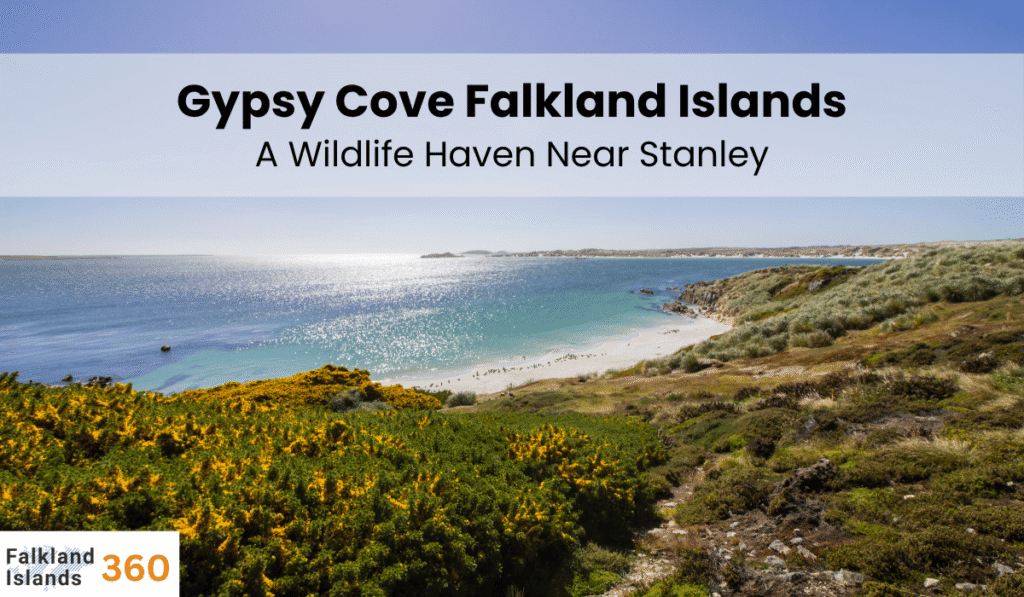
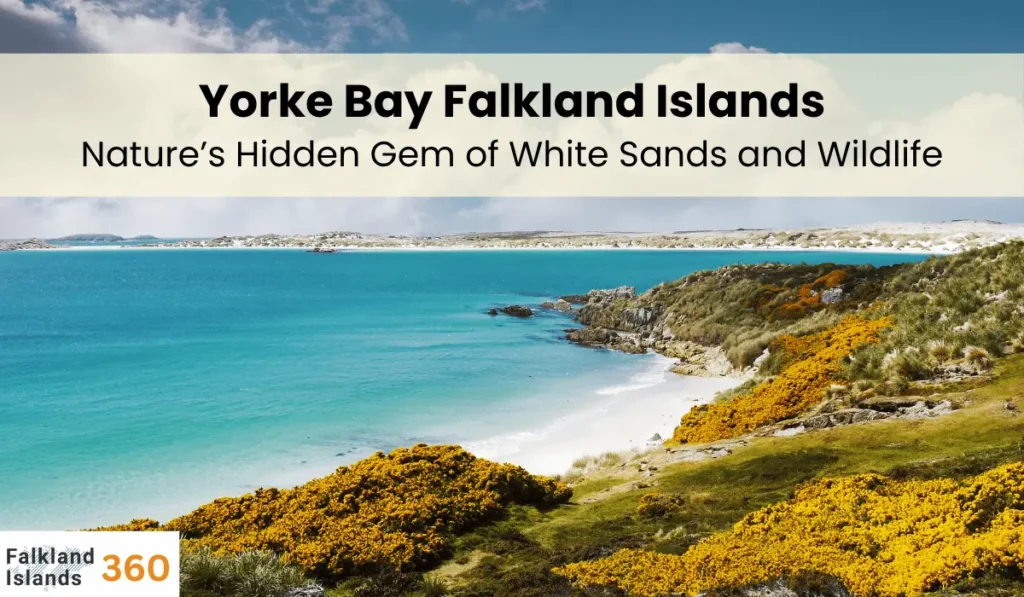
For a short first trip, Gypsy Cove and Yorke Bay provide relatively easy wildlife access near Stanley. Volunteer Point is the classic guided day trip for king penguins.
Longer trips can reach outer islands with richer multi-species experiences. Start with our complete guide to penguins in the Falkland Islands and the Falkland Islands bird guide.
Stanley: the easiest first base
Stanley is where most first-time visitors should get their bearings. It has the main concentration of hotels, guesthouses, restaurants, supermarkets, museums, shops and visitor services.
Staying in Stanley first also makes practical sense. You can recover from the long journey, confirm local tours, sort cash, and leave some flexibility before moving deeper into Camp or flying to an outer island.
Outer islands and FIGAS
Outer-island travel is one of the most distinctive parts of a Falklands trip. FIGAS, the Falkland Islands Government Air Service, operates more like an air-taxi network than a fixed scheduled airline. Daily flying is built around demand and the schedule is confirmed close to departure.
Official visitor guidance tells independent travellers to confirm accommodation before booking FIGAS. That order matters: the stay determines where you need to go, then the domestic air service is built around the confirmed itinerary.
If you are new to terms such as Camp, FIGAS, MPN or FIPASS, our Falkland Islands travel glossary explains them in plain English.
How many days do you need?
A short Stanley-focused trip is possible, but 7 to 10 days is a more useful planning range for many first-time independent visitors. That gives you time for Stanley, at least one major wildlife experience and some buffer for weather or transport.
Longer trips make more sense if you want several outer islands or a photography-heavy itinerary. Use our guide to how many days you need in the Falkland Islands to match trip length to travel style.
Where to stay
Accommodation ranges from larger Stanley hotels to small guesthouses, self-catering properties, farm stays and wildlife lodges. In a remote destination, location often matters more than hotel category.
Stanley is best for convenience. Outer-island lodges are best when wildlife is the reason for the trip. Our Falkland Islands hotels and accommodation guide compares the main options.
Tours, guides and travel agencies
A local guide is especially useful for remote wildlife sites, off-road routes, battlefield visits and cruise days where timing is tight. Volunteer Point, for example, is not a normal self-drive sightseeing stop.
If you want a complete itinerary built for you, compare Falkland Islands travel agencies and tour operators. If you prefer to arrange only individual excursions, see how to arrange private tours.
What does a trip cost?
The Falklands are not a low-cost destination. International flights, small accommodation inventories, internal aviation, long 4×4 excursions and imported goods all contribute to the budget.
The most useful approach is to price the trip in layers: international access, accommodation, FIGAS or road transport, tours, food and insurance. Our Falkland Islands trip cost guide breaks down those categories, while the food-cost guide uses current Stanley menu and grocery examples.
Money and payments
The local Falkland Islands pound is equal in value to pound sterling, and British pounds are accepted locally. Cards are widely useful in Stanley, but travellers should carry some cash because payment options become less predictable outside the capital.
See what currency to carry in the Falkland Islands before heading into Camp or to an outer island.
Is it safe?
Crime is generally a much smaller concern than practical travel risks such as rapidly changing weather, remote roads, wildlife boundaries and the cost of medical evacuation. Good insurance and sensible transport planning matter more here than city-style security precautions.
Our Falkland Islands safety guide covers crime, weather, roads, wildlife and emergency planning in more detail.
A simple first-trip framework
- Secure the international flight pattern that fits your dates.
- Confirm entry requirements and medical-evacuation insurance.
- Book the accommodation that matters most, especially in peak season.
- Add FIGAS, local transfers and private tours after the stays are confirmed.
- Keep the final night on East Falkland if your itinerary includes an outer island.
- Leave enough slack for weather and operational changes.
For a complete booking sequence, use the first-time independent trip planner and the guide to how far ahead to book.
Latest visitor context
The latest published tourism statistics show two very different visitor patterns: land-based travellers stay much longer and spend more per person, while cruise visitors account for far larger total arrival numbers. Our Falkland Islands travel statistics page explains the latest official figures and methodology.
Official sources worth checking before travel
- Falkland Islands Tourist Board: Getting Here for current flight routes.
- Falkland Islands Customs & Immigration: Visitor Permit for entry requirements and insurance.
- The Tourist Board’s wildlife, accommodation and local-tour listings for current visitor services.
Final takeaway
The Falkland Islands are easiest to enjoy when you plan around the destination’s real constraints rather than trying to force a normal city-break itinerary onto it. Secure the limited international access first, confirm accommodation before complex island travel, leave weather slack, and focus on a small number of places well. That approach gives you more wildlife time, fewer fragile connections and a much better first trip.
Frequently asked questions
Do I need a visa to visit the Falkland Islands?
Visa requirements depend on nationality. British citizens can normally visit without a visa and receive permission to stay for one month on arrival. Other nationalities should check Falkland Islands Customs u0026 Immigration before travel.
What is the main way to fly to the Falkland Islands?
The main scheduled civilian route is LATAM’s weekly Saturday flight from Santiago via Punta Arenas to Mount Pleasant Airport. A separate UK MOD Airbridge operates from RAF Brize Norton.
What is the best time to visit the Falkland Islands?
December to February is the easiest broad window for a first wildlife trip, while spring is strong for breeding behaviour and late summer is useful for chicks and fledging.
What wildlife can I see in the Falklands?
The islands support five breeding penguin species, black-browed albatross, many other seabirds, elephant seals, sea lions, whales, and dolphins.
Do I need travel insurance?
Land-based visitors should have adequate medical insurance. Customs u0026 Immigration says aeromedical evacuation cover should be at least US$2,000,000 equivalent.
How long should a first Falklands trip be?
Seven to ten days works for a focused first visit. A longer stay is better if you want several remote islands, more wildlife time, or photography flexibility.
If Stanley is part of your first visit, use the Stanley visitor guide to separate walkable city sights from excursions that need transport.