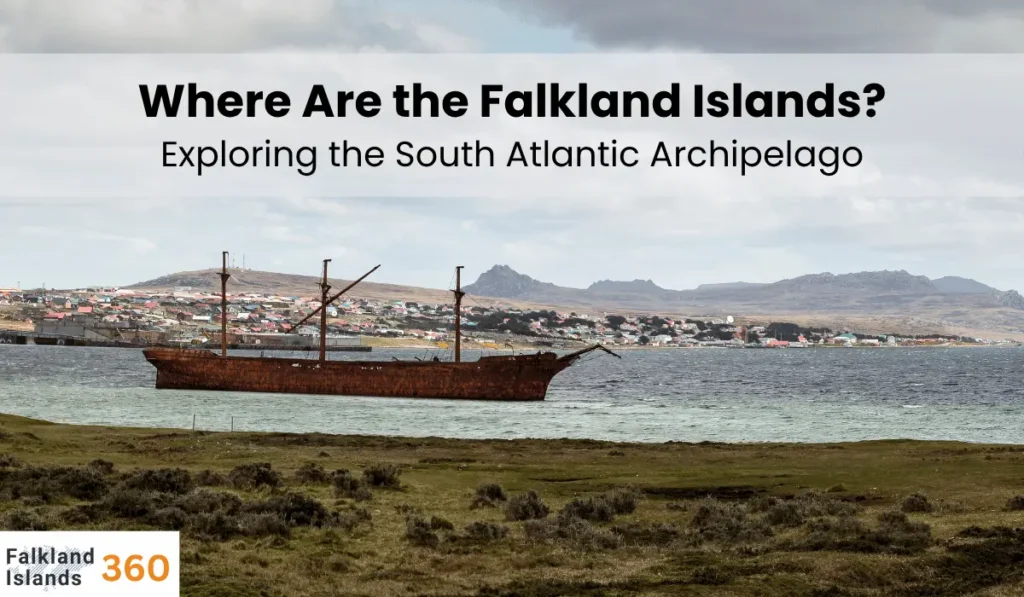

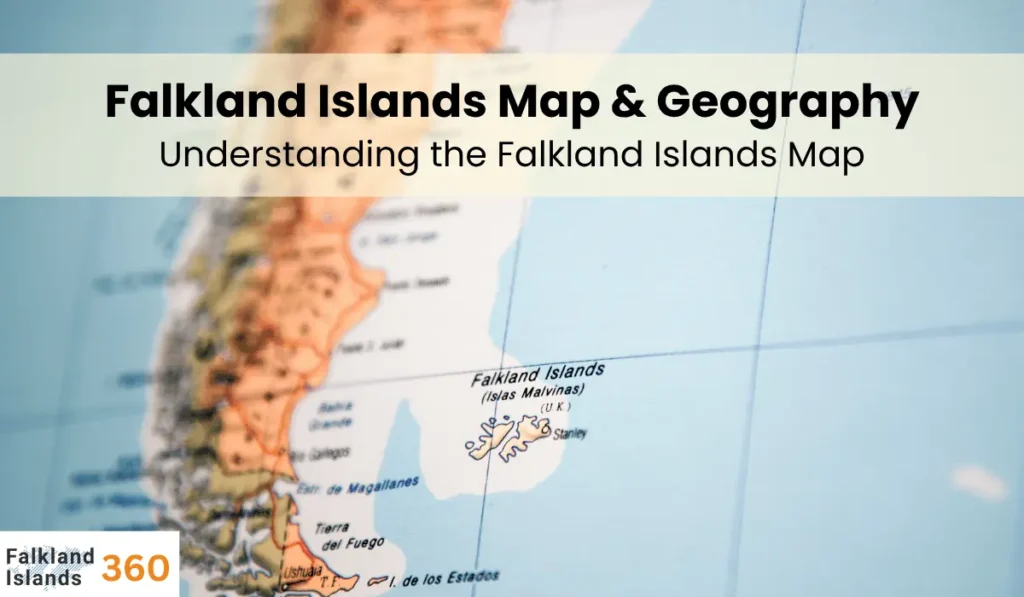
The Falkland Islands are an archipelago in the South Atlantic made up of East Falkland, West Falkland, and more than 700 smaller islands and islets. The total land area is about 12,173 km² (4,700 sq mi), and the capital, Stanley, sits on East Falkland.
For travelers, the map matters because geography directly affects road travel, FIGAS flights, ferry routes, wildlife access, weather exposure, and where accommodation is available.
Falkland Islands map at a glance
- Two main islands: East Falkland and West Falkland.
- Capital: Stanley on East Falkland.
- Archipelago: roughly 778 islands according to Falklands investment guidance.
- Total land area: about 12,173 km² (4,700 sq mi).
- Highest point: Mount Usborne, 705 m (2,312 ft), on East Falkland.
- Main international airport: Mount Pleasant Airport (MPN) on East Falkland.
Where are the Falkland Islands?
The islands lie in the South Atlantic, off the southeastern coast of South America. Official Falklands material commonly places them about 650 km (400 miles) from the South American coast. Their position explains the cool oceanic climate, persistent winds, and the importance of air and sea connections.
For a location-first explanation with distances and regional context, see Where Are the Falkland Islands?
East Falkland
East Falkland is the most populated and most important island for first-time visitors. Stanley, Mount Pleasant Airport, many road-accessible wildlife sites, and the main concentration of visitor services are here.
The island has two contrasting landscape zones. The north is hillier, including the Wickham Heights and Mount Usborne. South of the isthmus lies Lafonia, a much flatter expanse of open country.
Popular East Falkland destinations include Volunteer Point, Gypsy Cove, Yorke Bay, Darwin, Goose Green, and the Stanley area.
West Falkland
West Falkland is less populated and more rural. The landscape includes broad valleys, uplands, settlements, farms, wildlife sites, and offshore islands that are important for longer itineraries.
Travel between East and West Falkland can involve the ferry between New Haven and Port Howard, road travel on each island, or FIGAS depending on the itinerary and season.
Outer islands and smaller islands
The smaller islands are not just map details. They contain some of the Falklands’ most distinctive wildlife and lodge experiences. Places such as Saunders Island, Pebble Island, Sea Lion Island, Weddell Island, and Carcass Island can become major itinerary stops.
Most outer-island trips require more planning than an East Falkland road trip because accommodation, domestic flights, weather, baggage, and local transfers are closely linked.
Terrain and landscape
The Falklands are dominated by open landscapes rather than forests. Official tourism material describes mountain ranges, flat plains, rugged coastlines, sandy beaches, cliffs, sheltered harbours, peat, heath, and distinctive stone runs.
- Mountains and uplands: especially prominent on East and West Falkland.
- Open plains: particularly striking in Lafonia.
- Stone runs: long streams of angular rock that are a characteristic Falklands landform.
- Coasts: a mix of cliffs, rocky shores, white-sand beaches, coves, natural harbours, and kelp-fringed water.
Highest point: Mount Usborne
Mount Usborne on East Falkland is the highest point in the archipelago at 705 metres (2,312 feet). It sits in the Wickham Heights and is one of the clearest reference points for understanding the islands’ relief.
Climate and weather patterns
The Falklands have a cool oceanic climate shaped by the surrounding South Atlantic. Wind is a defining feature. Official tourism guidance notes a west-to-east contrast as well: western islands are generally drier and sunnier, while the east receives more rainfall.
Weather can change quickly, which is why map distance alone does not tell you how easy a route will be. Wind, road surface, ferry timing, and aviation conditions all matter. For month-by-month trip timing, use our best time to visit the Falkland Islands guide.
How geography affects travel
- Stanley and East Falkland: easiest area for road-based first trips and day tours.
- Mount Pleasant Airport: international flights arrive well outside Stanley, so transfers must be planned.
- Outer islands: often reached using FIGAS, with schedules built around demand rather than a fixed airline timetable.
- West Falkland: ferry, road, and air options may all form part of a longer route.
- Wildlife sites: many depend on private land, local guides, off-road travel, or accommodation-based access.
If you are turning the map into an itinerary, continue with the Falkland Islands travel-planning guide and the how many days you need guide.
Population and settlement geography
The islands’ land area is large relative to the resident population. The 2021 census recorded 3,662 usual residents, with 2,974 in Stanley. That concentration is why the map can look almost empty outside the capital even though there are active settlements, farms, lodges, and visitor sites across Camp.
See our Falkland Islands population and island-life guide for the full demographic breakdown.
Useful official geography sources
- Falkland Islands Tourist Board: East Falkland for landscape and Camp context.
- Falkland Islands Tourist Board: Mount Usborne for the official 705 m elevation.
- Falkland Islands Government census data for population and settlement figures.
Final takeaway
A Falkland Islands map is more than a location reference. It explains why Stanley dominates visitor services, why East Falkland is easiest for a first trip, why outer-island travel needs more coordination, and how mountains, plains, coasts, wind, and distance shape every itinerary.
Falkland Islands map and geography FAQs
What are the two main Falkland Islands?
The two main islands are East Falkland and West Falkland. They are surrounded by more than 700 smaller islands and islets.
Where is Stanley?
Stanley, the capital, is on East Falkland and is the main population and visitor-services center.
How large are the Falkland Islands?
The archipelago has a total land area of about 12,173 square kilometres, or 4,700 square miles.
What is the highest point in the Falkland Islands?
Mount Usborne on East Falkland is the highest point at 705 metres, or 2,312 feet.
Why does geography matter for visitors?
Road conditions, ferry routes, FIGAS flights, weather, private land access, and the wide spread of settlements all affect how quickly and easily visitors can move around the islands.