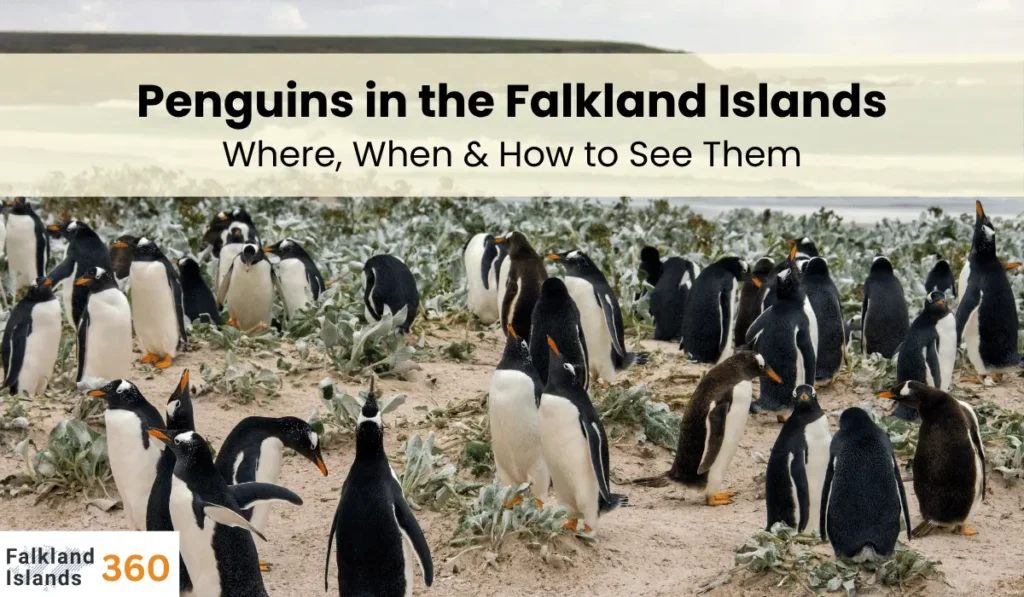

The Falklands are a major birding destination because large seabird colonies, five breeding penguin species, endemic birds and relatively accessible coastal habitat can be combined in one trip. The key planning decision is not how many species fit on a checklist—it is which islands give you complementary habitats without making the FIGAS schedule too fragile.
Choose islands by target birds
Saunders and West Point are strong for black-browed albatross and rockhoppers. Carcass is excellent for smaller land birds and striated caracaras. Stanley-area coasts add steamer ducks, geese, shorebirds and accessible Magellanic penguin habitat.
Allow 10–14 days if possible
A multi-island birding trip needs weather buffers. FIGAS routes are demand-driven and finalized close to travel, so avoid packing too many one-night island stays together.
Bring practical optics
Waterproof 8×42 binoculars are a versatile choice for broad birding, while 10×42 can help with distant seabirds if you can hold them steadily. Photographers should balance telephoto reach against wind and baggage weight.
Biosecurity is part of birding
Clean footwear, tripods, bags and clothing between sensitive sites. Predator-free islands are crucial for species such as Cobb’s wren, making biosecurity directly relevant to the birds visitors travel to see.
Use our 10–14 day birdwatching itinerary to turn these choices into a route.