
A Falklands trip gets easier once you understand a handful of local words. If you do not know that Camp means everywhere outside Stanley, or that FIGAS is not a normal scheduled airline, parts of your itinerary can sound more confusing than they really are. The same goes for terms like MPN, FIPASS, smoko, and outer islands.
This glossary is built for travelers, not specialists. It focuses on the words and short forms you are most likely to meet on official visitor pages, booking notes, cruise briefings, transport info, and local trip planning. A few details, especially transport arrangements, can change over time, so it still makes sense to confirm live logistics with the official visitor site or your host.
The few Falklands travel terms that matter most first
If you only remember eight terms before your trip, make them these:
| Term | Plain-English meaning | Why it matters |
|---|---|---|
| MPN | Mount Pleasant Airport | This is the airport code you will use when booking flights |
| Stanley | The capital | Many trips start here |
| Camp | Everywhere outside Stanley | This catches a lot of first-time visitors out |
| FIGAS | Domestic air service | Key for outer-island travel |
| Outer islands | Smaller islands beyond the two main islands | Common in wildlife itineraries |
| Settlement | Small inhabited place | Often where you stay or land |
| Smoko | Tea, coffee, cakes, and a social break | A real local travel experience |
| Biosecurity | Cleaning rules for boots and gear | Important for wildlife and farms |
The definitions in this quick table are drawn from official Falklands visitor information, FIGAS guidance, tourism pages, and Falklands Government sources.
A to Z glossary of Falkland Islands travel terms
A to C
Airbridge: In Falklands travel, “the Airbridge” usually means the UK Ministry of Defence-operated flight route from Brize Norton that civilians can also book seats on. It sits alongside the LATAM route as one of the main ways visitors arrive.
Biosecurity: This is one of the most important practical terms in the Falklands. It means the checks and cleaning steps used to stop seeds, soil, insects, disease, and invasive species moving between farms, landing points, and wildlife sites. Official guidance tells visitors to check, clean, dip, dry, and check again when moving between places.
Bogging: You may hear this word on overland wildlife trips. Official Falklands travel pages use it for those moments when a vehicle sinks into soft ground and has to be towed out. It is part of the local language around rough off-road driving.
Camp: This is the classic Falklands term that confuses newcomers. In local usage, Camp means everywhere outside Stanley. It does not mean a campsite. If someone says they are staying “in Camp,” they mean they are staying somewhere beyond the capital.
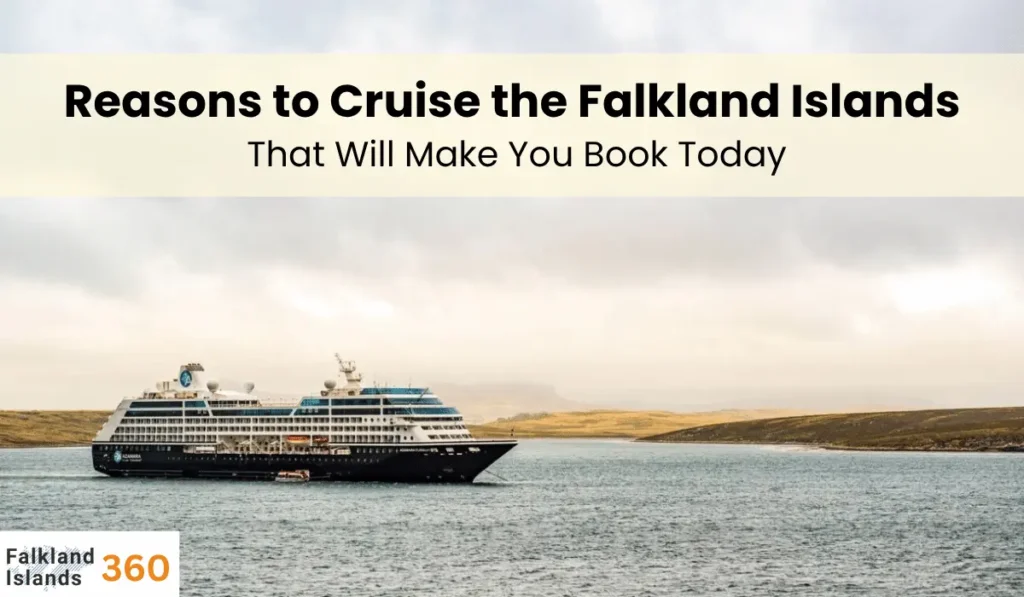
Cruise tender: Large cruise vessels often do not berth directly in town. Instead, passengers are brought ashore by tender boats. In Stanley, official visitor information says tenders from large cruise ships arrive straight at the Jetty Visitor Centre.
E to I
East Falkland: One of the two main islands of the archipelago. It is where Stanley and Mount Pleasant Airport are located, and it is the base for many road trips, guided wildlife excursions, and ferry access toward West Falkland.
FIGAS: Short for Falkland Islands Government Air Service. This is the domestic air service that moves residents, visitors, and freight around the islands. For travelers, the most important thing to know is that FIGAS is not a scheduled airline in the usual sense. It works as an air taxi service, with daily flying based on who needs to travel.
FIPASS: This stands for Falkland Interim Port and Storage System. It is an important port facility in Stanley Harbour and a term you may see on cruise schedules, harbour documents, or transport notes. Official port guidance describes it as a major maritime link for cargo and fuel, while tourist information explains that smaller cruise ships berth there and shuttle passengers to the Jetty Visitor Centre.
Falkland Islands pound: This is the local currency. The Falkland Islands Government states that the currency code is FKP and that it has parity with pound sterling. Official visitor FAQs also note that UK pounds are accepted and that many businesses accept cards, with some also accepting US dollars and euros.
Island hopping: In the Falklands, this usually means traveling between islands on small aircraft, especially FIGAS Islander flights. The tourist board describes it as one of the signature Falklands travel experiences, with each “hop” taking you to a new island, settlement, or farm stay.
J to M
Jetty Visitor Centre: Often shortened to JVC in tourism reporting. This is where the Tourist Information Centre is based in Stanley, on the corner of Ross Road and Philomel Street. It is one of the handiest terms to know if you arrive by cruise or need local maps, visitor help, or Stanley orientation.
KEMH: Short for King Edward VII Memorial Hospital. This is the main hospital in Stanley and the centre of the islands’ medical services. Official essential information pages also say land-based visitors should have travel insurance that includes medical evacuation.
LATAM: This is the international airline name most independent visitors will see when planning flights. Official visitor information says LATAM is the only international airline servicing the islands and tells travelers to search using MPN for Mount Pleasant Airport. Routes and schedules can change, so treat the airline name as useful planning vocabulary, then check the live booking details before you travel.
Mount Pleasant Airport: Usually shortened in planning discussions to MPN, its airport code. Official visitor pages say all flights arrive here on East Falkland. If you see MPN in a booking system, this is the airport you want.
Mount Pleasant Complex: Often shortened to MPC. Official visitor information says Mount Pleasant Airport is part of this complex, which is managed by the UK Ministry of Defence. Travelers do not need to use the term often, but it does appear in official documents and transport descriptions.
N to T
Narrows: This is a local geographic term you may meet when reading about the ferry to West Falkland. Official sea-travel pages mention passing through the narrows into Port Howard. In plain English, it means the narrower channel section on that ferry approach.
Off-roading: A normal part of some Falklands excursions. Official road-travel pages use this word for overland travel to places like Volunteer Point, where standard paved-road expectations do not apply. In practice, it means rough ground, clay or gravel surfaces, and skilled local drivers.
Outer islands: This usually means the smaller islands beyond the two main landmasses of East Falkland and West Falkland. Official visitor pages say the usual way to reach them is by FIGAS plane, which is why this term shows up so often in wildlife itineraries.
Settlement: In Falklands travel, a settlement is a small inhabited place, often tied to a farm, guesthouse, lodge, landing strip, or local community. You will see the word all over official tourism pages because many stays and excursions are built around settlements rather than towns in the usual sense.
Smoko: One of the more enjoyable Falklands words. Official tourism pages describe smoko as a local tradition of tea or coffee served with home-baked cakes, biscuits, and other treats, usually mid-morning, mid-afternoon, or when cruise visitors arrive. It is part snack break, part social pause.
Stanley: The capital and the main service centre for most visitors. Many trips begin or end here, and it is where you find the Tourist Information Centre, museum access, shops, taxis, and the main cluster of visitor services. Official tourism content repeatedly treats Stanley as the natural first base for short stays and arrivals.
Stanley Airport: This is different from Mount Pleasant Airport. In official FIGAS information, Stanley Airport is the hub for the domestic air service and the starting point for daily inter-island flying. If you are island hopping, Stanley Airport matters more than MPN once you are already in the Falklands.
Stone runs: A classic Falklands landscape term. Official tourism pages describe them as rivers of rock or long streams of rock cascading down hillsides. You will often see the phrase in walking, geology, and landscape content.
Tender landing: A phrase cruise visitors hear a lot. In Stanley, it means the point where passengers come ashore from smaller boats after leaving the ship. Official tourist information explains that large-cruise tenders come straight to the Jetty Visitor Centre.
Tourist Information Centre: The main official visitor-help point in Stanley. It is based at the Jetty Visitor Centre, where staff help with maps, local advice, and visitor questions. In practice, Tourist Information Centre and Jetty Visitor Centre are closely linked terms, but they are not exactly the same thing. The Centre is the service inside the JVC building.
Tussac: A tall native grass that matters more than it first sounds. Official Falklands guidance describes tussac grass as a major wildlife habitat and notes that it can grow over 3 metres tall. Travelers usually meet the word in wildlife walks, island descriptions, and marine-mammal sites.
V to W
Volunteer Point: This is not just a place name. It is one of the most common terms in Falklands trip planning because it is the best-known king penguin day trip from Stanley. Official visitor FAQs say it is around a two-and-a-half-hour drive from Stanley and that visitors must have a local guide.
West Falkland: The second of the two main islands. Official pages describe access by ferry from New Haven to Port Howard as well as by flight and road. When travelers say they are “going to the West,” they usually mean West Falkland.
Wildlife colony: This is a general travel phrase rather than a Falklands-only term, but you will see it constantly in local trip planning. It usually refers to a breeding or gathering site for penguins, albatross, seals, or other wildlife. In the Falklands, the phrase often comes with strict visitor behavior rules such as keeping distance, avoiding animal routes to the sea, and following biosecurity measures.
Workboat Services / MV Concordia: This is the ferry operator and vessel name most travelers meet when planning sea travel between East and West Falkland. Official tourism pages say Workboat Services operates the MV Concordia ferry between New Haven and Port Howard.
Which terms matter most by trip type
If you are a cruise visitor, the terms to know first are tender, Jetty Visitor Centre, Stanley, Volunteer Point, and local guide. Those shape how shore time actually works.
If you are doing a land-based wildlife trip, focus on MPN, Stanley, Camp, FIGAS, outer islands, biosecurity, and tussac. Those are the terms that show up most in real logistics and wildlife briefings.
If you want to travel independently, add Airbridge, LATAM, Mount Pleasant Airport, Stanley Airport, ferry, and settlement to your must-know list. Those words make booking pages and local advice much easier to follow.
Final thought
A Complete Glossary of Falkland Islands Travel Terms is useful because the islands run on a mix of official transport shorthand, local habit, geography words, and practical visitor language. Learn the basics before you go, and a Falklands itinerary stops sounding complicated. It starts sounding exactly what it is: remote, structured, and very manageable once the vocabulary clicks.
FAQ Section
What does “Camp” mean in the Falkland Islands?
It means everywhere outside Stanley. It does not mean a campsite.
Is FIGAS a normal scheduled airline?
No. Official visitor information says FIGAS works as an air taxi service, with daily flying based on who needs to travel.
What is the difference between MPN and Stanley Airport?
MPN is Mount Pleasant Airport, the main international arrival airport. Stanley Airport is the hub for FIGAS domestic flights.
What is FIPASS?
It is the Falkland Interim Port and Storage System in Stanley Harbour, an important port facility used for cargo and some ship operations. Smaller cruise ships may berth there.
What does smoko mean in the Falklands?
It is a tea or coffee break with cakes, biscuits, and other baked treats, usually served mid-morning or mid-afternoon.
Do travelers need to think about biosecurity?
Yes. Official guidance tells visitors to clean boots, clothing, and equipment between sites to protect wildlife areas and farms.