
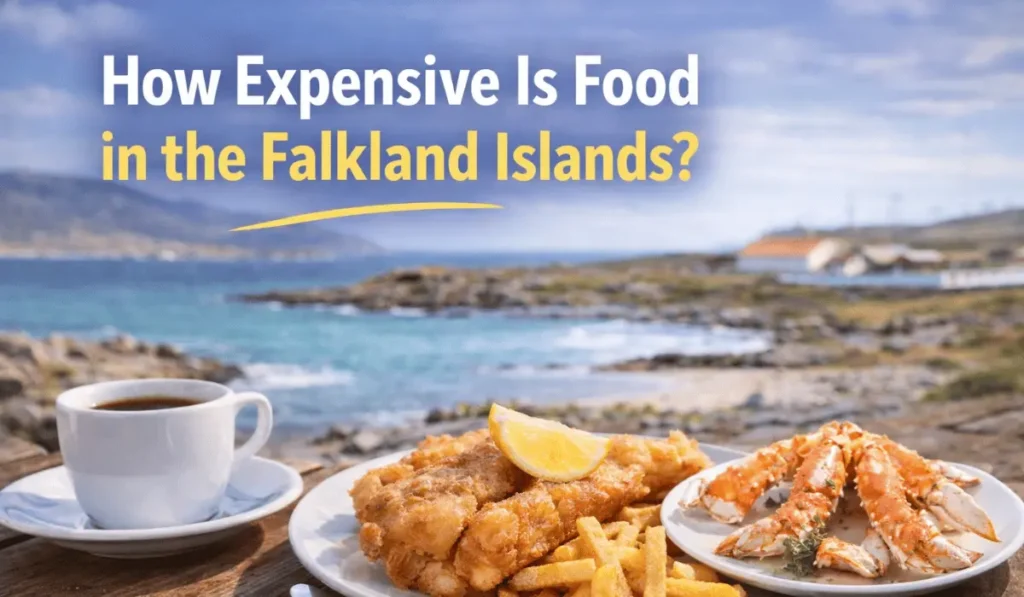
Food in the Falkland Islands is usually noticeably expensive for travelers, especially if you are comparing it with mainland South America. A simple meal out in Stanley is often around £15 to £20, casual mains at current Stanley menus often sit around £15.95 to £17.95, and more restaurant-style mains can reach roughly £18.95 to £30.95. Grocery prices also run high on several basics, with current crowdsourced estimates putting 12 eggs around £5.37 to £5.98, 1 litre of milk around £1.40 to £1.55, and 1 kg of apples around £5.83 to £7.10. Exact prices move, but the broad answer is clear: food is not cheap here.
The useful part is not just knowing that it is expensive. It is knowing where the money goes, what changes between Stanley and the outer islands, and how to budget without guessing. The Falklands tourism site shows a decent food scene in Stanley, plus supermarkets and cafés, but it also warns that many destinations outside Stanley are very remote and that you may need to take food with you from Stanley or pre-arrange meals with your accommodation.
TL;DR
A practical food budget looks like this:
| Travel style | Likely food spend per person per day |
|---|---|
| Tight budget with groceries and simple café meals | about £15 to £25 |
| Mixed budget with one casual meal out | about £25 to £40 |
| More comfortable trip with restaurant dining | about £40 to £70+ |
These are not official government budgets. They are grounded in a mix of current Stanley menu prices, official tourism information on food access, and crowdsourced cost-of-living datasets that should be treated as approximate rather than exact.
Why food feels expensive in the Falklands
The first reason is simple: the Falklands are remote. Official visitor information says many places outside Stanley are very remote, and food supply for travelers often needs planning in advance. The official retail pages also show that Stanley’s main supermarkets carry broad grocery ranges, including frozen foods, dry goods, meat, fish, fruit, vegetables, and ready-to-eat items, which tells you Stanley is the main supply base for most visitors.
The second reason is that the public food market is small. The official Eat & Drink directory shows a healthy range of cafés, diners, pubs, and hotel restaurants, but this is still a small destination with limited local competition compared with a normal city. That tends to keep prices firmer, especially once you move from quick lunches into restaurant dinners.
What a meal out usually costs
The safest way to answer this is with current sample menus and then cross-check them against broader cost databases.
At The Waterfront Kitchen Café, a full English breakfast is £12.95, eggs Benedict is £10.95, fish and chips on the lunch menu is £14.95, a burger is £15.95, and dinner mains like blackened baked toothfish or spring lamb casserole are £19.95, while steak dishes run from £24.95 to £29.95.
At Malvina House Hotel, current 2025 menu examples show a chicken burger at £15.95, curry at £16.95, beer battered fish and chips at £14.95, baked local toothfish at £20.95, and steaks from £16.95 for a 6oz minute steak up to £32.95 for a 14oz T-bone.
Those menu prices line up fairly well with crowdsourced Stanley restaurant averages. Numbeo currently shows £20 for a meal at an inexpensive restaurant in Stanley and £60 for a mid-range meal for two without drinks, while Expatistan currently lists a basic lunchtime menu with a drink at £15 and a basic dinner out for two in a neighborhood pub at £65. Both services are user-submitted databases, so treat them as directional rather than authoritative price controls.
A realistic takeaway is this:
Breakfast or lunch in Stanley often lands around £7 to £16. Casual dinner mains often sit around £15 to £21. Steaks, better fish dishes, and a fuller dinner can move above £20 quickly.
What groceries usually cost
Supermarkets clearly exist and are useful for travelers. Official tourism pages list West Store Supermarket, Chandlery Supermarket, and Southern Imports, while the West Store Stanley page says it is one of the largest retail outlets in the islands and carries a full grocery range, including bakery items, meat, fish, fruit, and vegetables.
What is harder to find publicly is a live official supermarket price list. For that reason, the best public guidance comes from crowdsourced food-price databases, with a clear caution that prices vary by stock, delivery cycles, and contributor data.
Current Numbeo figures for Stanley show roughly:
- Milk, 1 litre: £1.55
- Bread, 500 g: £2.29
- Eggs, 12: £5.37
- Chicken fillets, 1 kg: £7.21
- Beef, 1 kg: £8.89
- Apples, 1 kg: £7.10
- Tomatoes, 1 kg: £6.10
- Potatoes, 1 kg: £2.40
- Lettuce, 1 head: £3.23
Current Expatistan figures for the Falklands overall show a very similar pattern:
- Milk, 1 litre: £1.40
- Eggs, 12: £5.98
- Chicken breast, 500 g: £5.50
- Tomatoes, 1 kg: £5.69
- Apples, 1 kg: £5.83
- Potatoes, 1 kg: £1.90
- Bread for 2 people for 1 day: £3.40
The broad message from both sources is consistent. Grocery shopping can still save money, but it is not “cheap destination” shopping. Fresh produce and eggs stand out as fairly pricey.
Daily food budget by travel style
For a traveler staying in Stanley with access to a supermarket and a café or two, a tight but workable daily spend is around £15 to £25. That usually means some self-catering, supermarket snacks, and one simple paid meal. That estimate fits current crowdsourced “minimum food spend” ranges of about £9.89 to £12.70 per person per day for home-style food, with extra room added for coffee, snacks, or a café stop.
A middle-budget traveler who grabs breakfast or coffee, has a casual lunch, and eats one dinner out in Stanley will often land around £25 to £40. A breakfast at around £10.95 to £12.95, a lunch item around £7.50 to £14.95, and a casual main around £15.95 to £17.95 can push the total up quickly, even before drinks.
A more comfortable dining pattern with restaurant dinners, drinks, or higher-end mains can move into the £40 to £70+ range per day. That range is supported by the higher end of current menu pricing and by the crowdsourced restaurant benchmarks for Stanley.
How food costs change outside Stanley
This matters more than many travelers expect. Official Falklands visitor FAQs say that many destinations outside Stanley are very remote, and you should check with your accommodation provider in advance whether food can be supplied at your destination. In some cases, you may need to take what you need from Stanley, and ready-made meals may need to be arranged ahead of time.
That changes the budget in two ways. First, your food is often bundled into a remote stay or arranged around the property rather than chosen from multiple public restaurants. Second, the question stops being “What does lunch cost?” and becomes “What meals are available where I am staying?” For remote travel, food cost is often wrapped into the overall trip shape rather than handled as a simple daily city budget. That conclusion is an inference from the official visitor guidance and the small, remote nature of non-Stanley destinations.
Ways to keep food spending under control
The easiest savings usually come from mixing supermarket food with a few meals out, not trying to dine out for every meal. Stanley has the strongest grocery base, with the West Store, Chandlery, and other general grocery outlets listed by official tourism pages.
Self-catering also matters. The official accommodation pages list self-catering as a real option across parts of the islands, and that can take pressure off your budget, especially on longer stays.
One more practical note: official Falklands FAQs say many shops, restaurants, and accommodation providers accept US dollars, euros, and credit cards, but you should check before buying. That is useful for food budgeting because payment convenience can vary, especially once you move beyond the main Stanley cluster.
Final thoughts
So, how expensive is food in the Falkland Islands? Expensive enough that it should be part of your trip planning, but not so extreme that it breaks a well-planned budget. In Stanley, a simple breakfast can be around £7 to £13, a casual lunch or diner-style meal often lands around £8 to £17, and a proper dinner can move from the mid-teens into the £20 to £30+ range. Groceries can save money, but staples like eggs, fruit, and some fresh produce are still relatively expensive by most travelers’ standards. The best way to budget is to treat Stanley as your main food base, use supermarkets where it makes sense, and check meal arrangements early for any stay outside Stanley.
FAQ Section
Is food expensive in Stanley?
Yes. Current public menus and crowdsourced Stanley cost data both point to food being fairly expensive, especially compared with mainland South America. Casual mains commonly sit in the mid-teens, and restaurant meals can go well beyond that.
Are groceries cheaper than eating out in the Falklands?
Usually, yes, but groceries are not cheap either. Public supermarket pages show good grocery access in Stanley, while crowdsourced price databases still show fairly high prices for basics like eggs, fruit, and bread.
Can you buy food outside Stanley?
Sometimes, but you should not assume it. Official visitor guidance says many destinations outside Stanley are very remote, and you may need to pre-arrange food or take supplies from Stanley.
What is a reasonable daily food budget for the Falklands?
A useful working range is about £15 to £25 on a tight plan, £25 to £40 for a mixed budget, and £40 to £70+ for more comfortable dining. That estimate is based on current menu examples plus crowdsourced food-price benchmarks.
Do restaurants and shops take cards?
Many do, but official tourism guidance says you should check before buying.