
When people think of the Falkland Islands, the first images that usually come to mind are either the 1982 conflict or a vast, windswept rock at the edge of the world. Because it is a British Overseas Territory tucked away in the South Atlantic, it occupies a strange space in the travel world. It is too far for a casual holiday, too expensive for many budget travelers, and arguably the most British place outside of Britain itself.
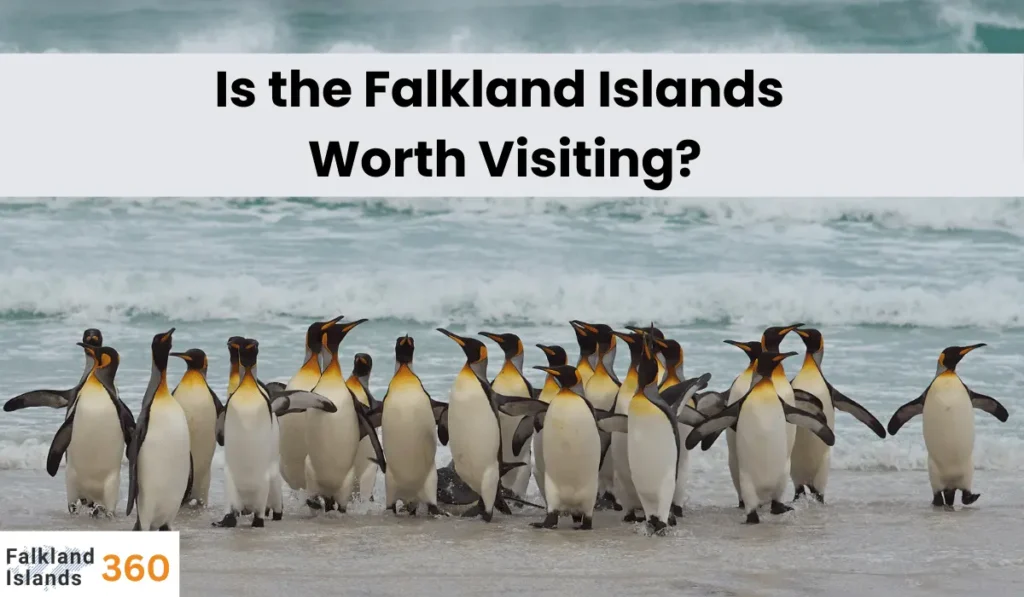
But is it worth visiting? For the right kind of traveler, the answer is a resounding yes. If you are looking for five-star luxury resorts, bustling nightlife, or reliable tropical sun, you should probably look elsewhere. However, if you crave raw, untouched nature, wildlife that has zero fear of humans, and the kind of profound silence that is becoming extinct in the modern world, the Falklands might just be the best trip you ever take.
What Makes the Falklands Unique?
The Falkland Islands are an archipelago of over 700 islands, though most of the action happens on East and West Falkland and a handful of smaller, privately owned islands. What sets this destination apart is the accessibility of its wildlife. In many parts of the world, you need high-powered binoculars and a lot of luck to see rare species. In the Falklands, you often have to watch where you step to avoid a penguin burrow.
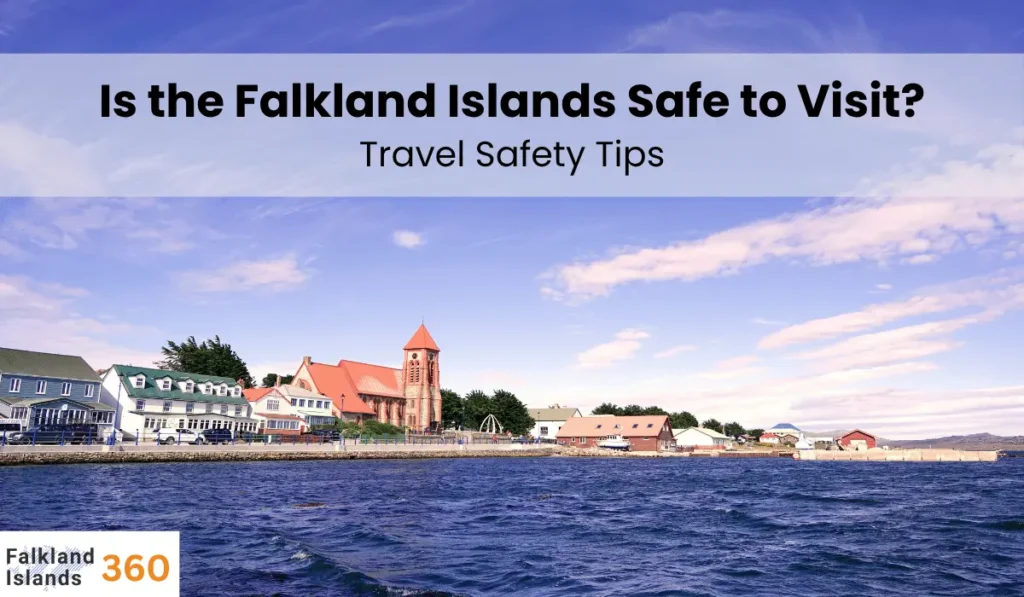
There is also the cultural paradox. Walking through the streets of Stanley feels like stepping into a sleepy village in the Scottish Highlands or the Cotswolds. You will find red telephone boxes, Land Rovers everywhere, and pubs serving fish and chips alongside local ales. Yet, look out toward the harbor, and you might see a pod of Commerson’s dolphins playing in the surf. It is this blend of familiar British comfort and wild South Atlantic frontier that creates such a distinct atmosphere.
The Wildlife Experience: Beyond the Penguins
While penguins are the headline act, the biodiversity of the islands is staggering.
The Five Species of Penguins
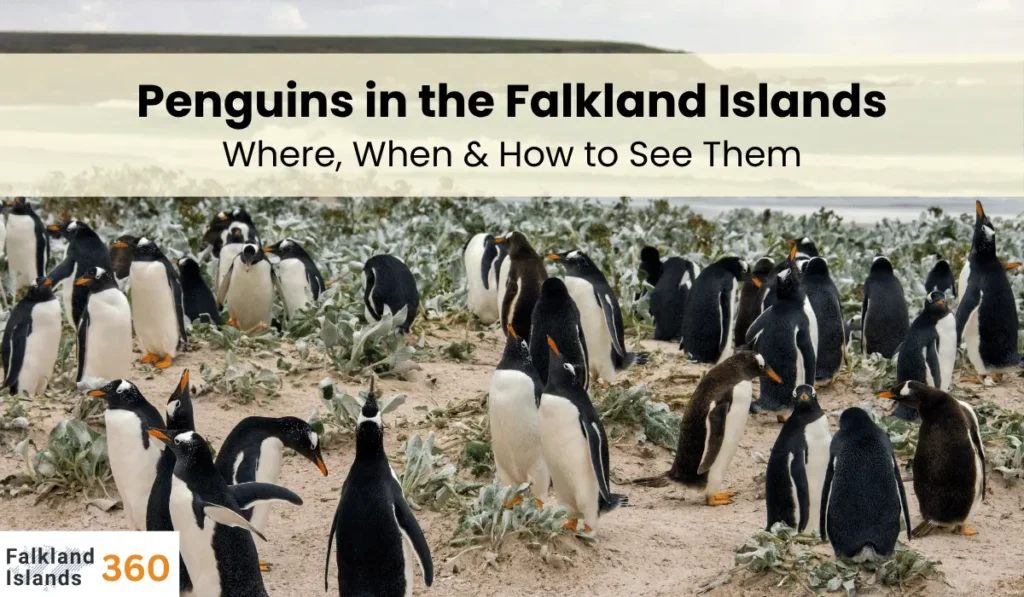
Most visitors come to see the penguins, and the Falklands do not disappoint. You can find five different species here:
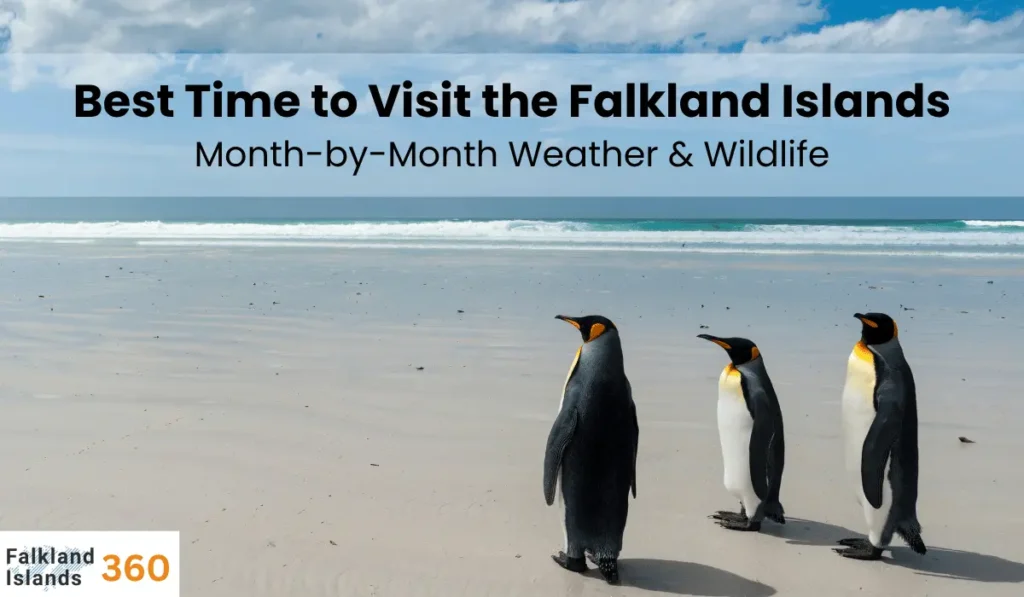
- King Penguins: The most regal of the bunch, found in large numbers at Volunteer Point.
- Rockhoppers: Known for their feisty personalities and their ability to scale vertical rock faces.
- Gentoos: The fastest swimmers, often seen sprinting through the surf.
- Magellanic: Burrowing penguins that live in holes in the ground.
- Macaroni: The rarest of the five in the Falklands, though they can be spotted in specific colonies.
Marine Mammals and Birds
The beaches are often shared with Southern Elephant Seals and South American Sea Lions. Watching a three-ton bull elephant seal defend his harem is a visceral, loud, and unforgettable experience.
For birdwatchers, the islands are a pilgrimage site. They hold roughly 70% of the world’s population of Black-browed Albatross. Seeing these massive birds, with wingspans of over two meters, gliding effortlessly over the cliffs is a highlight for even the most casual observer. You might also spot the Striated Caracara, a bird of prey locally known as the “Johnny Rook,” which is famous for its intelligence and its habit of stealing hats or cameras from unsuspecting tourists.
Logistics: Getting There and Around
One of the main reasons the Falklands remain “undiscovered” is the logistics. Getting there is an adventure in itself, and it is not particularly cheap.
How to Reach the Islands
There are two main ways to fly into Mount Pleasant Airport (MPN):
- The RAF Airbridge: A flight directly from Brize Norton in the UK with a refueling stop. It is long and expensive, but it is the most direct route from Europe.
- The LATAM Route: Flying from Santiago or Punta Arenas in Chile. This is generally the most common route for international travelers.
Traveling Between Islands (FIGAS)
Once you arrive, getting between the outer islands is done via FIGAS (Falkland Islands Government Air Service). These are small, 9-seater planes that land on grass strips or beaches. There is no set schedule; the flight plan is created every day based on passenger demand. It is a quirky, wonderful way to travel, providing incredible aerial views of the “stone runs” and turquoise coastlines.
The Cost Factor: Is It Worth the Price Tag?
Let’s be honest: the Falkland Islands are expensive. Because almost everything is imported, from fuel to fresh fruit, the cost of living is high. You should expect to pay prices similar to or higher than London for food and accommodation.
A typical 10-day trip in 2026 can easily cost between £4,000 and £6,000 per person when you include international flights, internal FIGAS hops, and lodge stays. If you are on a tight budget, this may not be the destination for you. However, for those who have already done the “big” trips like Antarctica or the Galapagos, the Falklands offer a similar level of wildlife density at a slightly lower price point and with far fewer crowds.
When to Visit for the Best Experience
The Falklands follow the Southern Hemisphere seasons. The “best” time to visit is during the austral summer, from October to March.
- October & November: This is the best time for photography. The elephant seals are pupping, and the penguins are returning to their colonies to find mates.
- December & January: This is peak season. The days are long (up to 18 hours of daylight), and the penguin chicks are hatching.
- February & March: Great for seeing the older penguin chicks and spotting whales offshore. This is also when the sea lion pups are most active.
Visiting during the winter (May to September) is generally discouraged for first-time visitors. Many of the island lodges close, the weather is brutal, and much of the wildlife has headed out to sea.
Honest Pros and Cons for First-Time Visitors
Pros
- Unrivaled Wildlife Access: You can sit on a beach and have penguins walk within feet of you. There are no boardwalks or fences.
- Solitude: It is entirely possible to spend a whole day on a world-class beach and not see another human being.
- Safety: The islands are incredibly safe. Crime is virtually non-existent, and the locals are famously hospitable.
- Photographer’s Dream: The light in the South Atlantic is incredibly clear, and the wildlife is a cooperative subject.
Cons
- The Wind: It is constant. The wind can be exhausting and can occasionally ground flights.
- Expense: It is one of the more expensive destinations in the Southern Hemisphere.
- Limited Infrastructure: Outside of Stanley, roads are gravel or non-existent (4×4 only). Internet can be slow and expensive.
- Flight Delays: You have to be flexible. “Falklands time” means things happen when the weather allows.
Conclusion: The Final Verdict
The Falkland Islands are worth visiting if you value authenticity over artifice. It is a destination that demands patience and a sense of adventure. It is not a place where you tick off sights from a list; it is a place where you sit in the tussock grass for three hours just watching an albatross tend to its nest.
If you are a naturalist, a photographer, or someone who simply needs to “unplug” from the noise of the modern world, the Falklands are not just worth visiting—they are transformative. It is one of the few places left where nature still calls the shots, and as a visitor, you are merely a quiet observer of a very old and very beautiful cycle.
FAQ
Do I need a visa to visit the Falklands?
Most Western nationals (UK, US, Canada, EU, etc.) do not need a visa for stays up to 30 days. However, everyone must have proof of onward travel, pre-booked accommodation, and travel insurance that includes medical evacuation.
Is the weather always cold?
It is rarely “freezing” in the summer, but it is rarely “hot.” Expect temperatures between 10°C and 15°C (50°F to 60°F). The wind chill factor is the real issue, so high-quality windproof clothing is essential.
Can I see the 1982 battlefields?
Yes. There are excellent local guides in Stanley who offer battlefield tours. You can visit sites like Goose Green, Mount Tumbledown, and San Carlos. It is a moving and educational part of any visit.
Is there internet on the islands?
There is 4G in Stanley and some larger settlements, but it is not “high speed” by global standards. Most lodges have Wi-Fi, but it is often satellite-based and can be expensive or slow. It is best to plan for a “digital detox.”
What is the food like?
The food is hearty and British-influenced. Expect excellent local lamb, beef, and world-class seafood (Upland Goose, Sea Trout, and Squid). A local tradition is the “smoko”—a mid-morning tea break with an incredible array of home-baked cakes and biscuits.